


How to Keep a Gratitude Journal When You Feel Low

Some evenings the page stays blank. Not because there is nothing good in your life, but because the day took everything you had, and writing a list of blessings feels like being asked to smile for a photograph you did not agree to. If that sounds familiar, the problem is not you. It is the version of gratitude journaling you have been sold.
Gratitude on a low day looks different. It is quieter, smaller and far less photogenic. Here is how to keep the habit going when cheerfulness is not available.
Gratitude Is Not the Same as Cheerfulness
Most gratitude advice assumes a reasonably good day. Write three things, feel uplifted, repeat tomorrow. On a genuinely flat day, that instruction can backfire. Trying to manufacture warmth you do not feel tends to add a layer of guilt on top of the tiredness — as though you have failed at feeling better.
Separate the two ideas. Gratitude is noticing. Cheerfulness is a mood. You can do the first without the second, and the noticing still counts even if your mood does not budge by a single degree. The aim is not to talk yourself out of a low day. It is to keep one small thread of attention running towards what is bearable.
Lower the Bar Until It Looks Almost Silly
Aim for entries so modest that nobody would put them on a card. The test is not whether a thing is impressive. The test is whether it is true and mildly pleasant. If both boxes are ticked, it goes in.
- The bus arrived within two minutes.
- The tea was still hot when I got to it.
- Nobody rang after eight o'clock.
- There was a clean towel on the rail.
- I found the other glove.
Five words is plenty. A single word is plenty. If you are writing more than a line, you may be performing rather than noticing.
The rule of one
Three things is a target built for good days. On a hard one, choose one. If even one feels like too much, take half of one: the second half of a biscuit, the first sip of something cold, the two minutes when the rain stopped.
Notice With Your Senses, Not Your Judgement
When you are low, your thoughts are usually the least reliable narrator in the room. They will argue with anything positive you try to write. Sensations are harder to argue with. Warm water on your hands. A jumper that does not itch. The particular smell of pavement after rain. The weight of a duvet.
Write down what you noticed rather than what you felt about it. "Hot water bottle" is a better entry than "I felt comforted," because the first one is a fact and the second one is a claim your mind can dispute at midnight.
Some prompts that work when nothing else does:
- Something my body was glad of today.
- Something I touched that was the right temperature.
- Something I did not have to do.
- Something that made a sound I did not mind.
- Something small that worked first time.
Let Neutral Count
Low days rarely produce highlights, but they often produce neutral facts, and neutral is underrated. The bin collection happened. No unexpected bills arrived. The phone charged overnight. The cat used the litter tray rather than the laundry basket.
Neutral entries are useful for two reasons. They are honest, so you will not feel like a fraud writing them. And they keep the habit alive, which matters more than the content of any single page. A journal with three dull lines in it is still a journal you are keeping.
A Five-Minute Evening Routine
- Fix a time and a place. Beside the kettle, or on the edge of the bed. Somewhere you already pause.
- Set a timer for three minutes. A limit removes the pressure to be thorough.
- Write the date, then one line. Date first, so the page never sits there empty and intimidating.
- Skip rereading if it hurts. Looking back at brighter weeks can be discouraging. It is fine to write and close.
- Stop when the timer goes. No grading, no scoring out, no starting again.
Keep the notebook somewhere visible but not accusing. A drawer is fine. A kitchen table covered in unopened post is not.
When Writing Feels Like Too Much
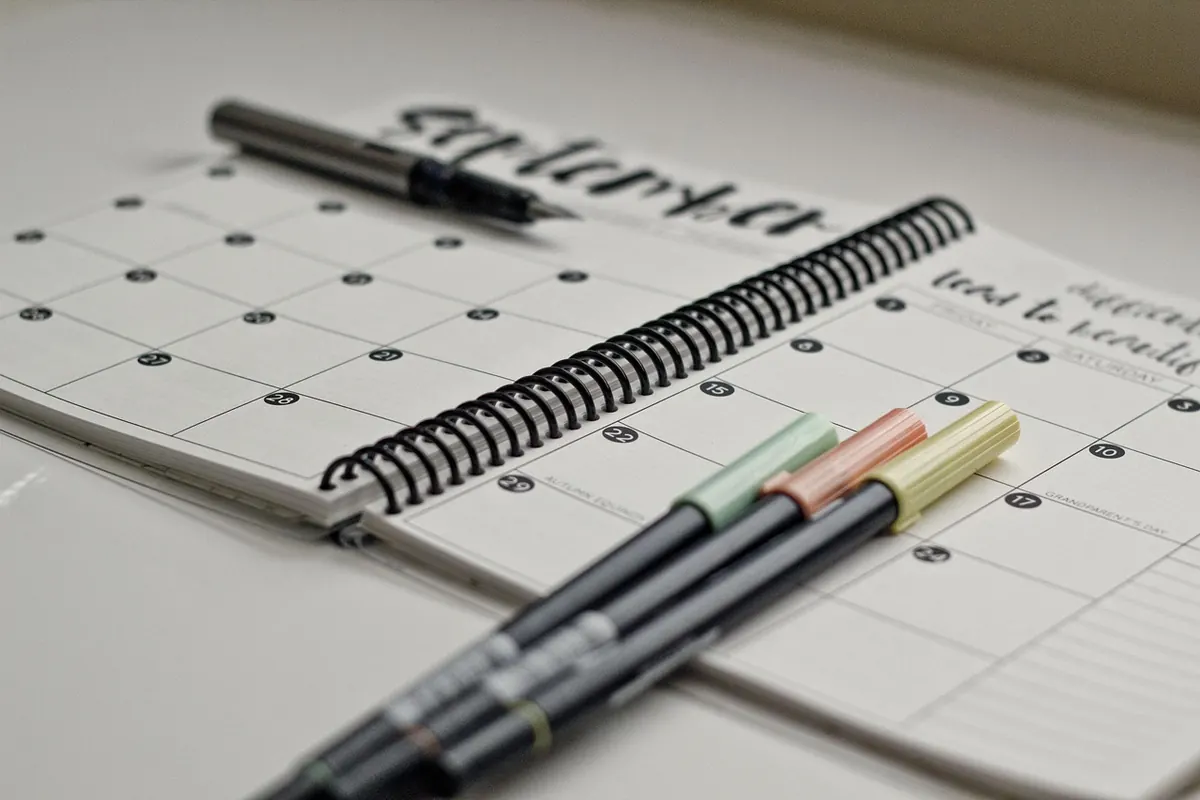
Some days, holding a pen is the obstacle. Take the smallest possible version of the habit instead. Type one word into your phone notes. Photograph something you liked the look of. Record a fifteen-second voice memo. Draw a single dot on the calendar and let that be the entry.
It also helps, sometimes, to write the difficult thing first. Half a page about what went wrong, then one line about what did not. Putting the day down before you go looking for anything good in it is not cheating. It is sequencing.
Keep It Kind, Keep It Small
Consistency beats volume every time. A journal that receives ten honest words a week is doing its job far better than one that gets a beautiful page once a month and then nothing. On the lowest days, your only aim is to keep the thread running.
If the low feeling does not lift — if it lasts for weeks, disrupts sleep or appetite, or brings a sense of hopelessness — a notebook is not the right tool on its own. Speak to your GP and ask what support is available locally. Journaling works well alongside proper help, not instead of it.
Tonight, if you open the book at all, write one true, small, unimpressive thing. The bus was on time. The tea was hot. That is enough for today.
Photo: 6689062 / Pixabay