


Structured Planner vs Free-Writing Diary: Which Suits Your Lifestyle?

Some mornings you want a page of ruled boxes and a tick list you can finish before breakfast. Other mornings you want to scrawl half a page about a dream you can't shake. Both are journalling. They simply ask different things of you, and they give different things back.
The choice between a structured planner and a free-writing diary isn't about which one is better. It's about which one you'll still be using in March. Here's how to work out which fits the life you have, rather than the one you keep meaning to have.
Most people bounce between the two because they treat it as a personality test. It isn't. It's a design question. What do you want the page to do for you on a Tuesday when you're tired, rushed, and not especially inspired? The answer to that question is worth more than any aesthetic preference.
What Counts as a Structured Planner
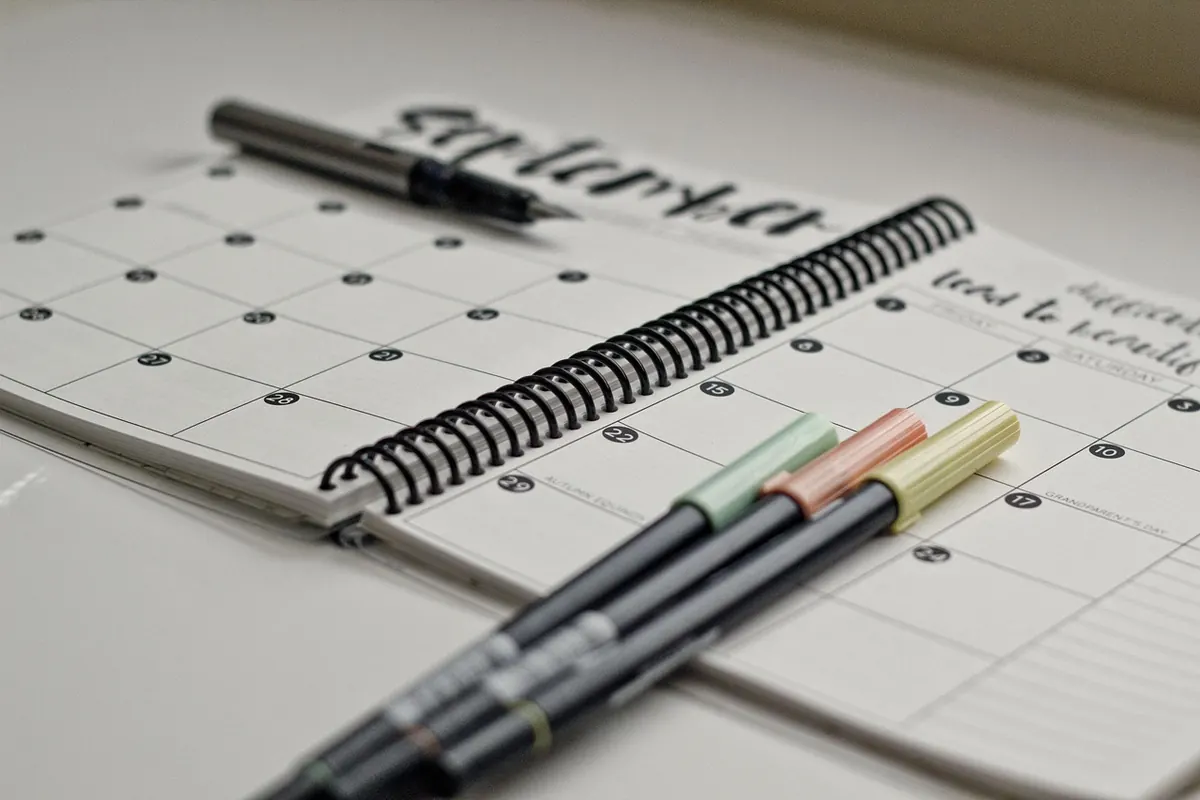
When people say planner, they usually mean a journal with the frame already built in. Habit trackers. A mood scale. Prompts for gratitude, sleep, water, screen time. Three lines for today's priorities and one for how it went.
The defining feature is that the page tells you what to do. You fill in the blanks rather than deciding what deserves a blank in the first place. That removes a small but real decision from your day, and it matters most on the days you have least to spare.
It also turns the journal into a record you can read back. After a month you might notice your mood dips every Sunday evening, or that you only read on the days you wrote it down first. That pattern-spotting is the quiet payoff.
There's a wide range within this category. A pre-printed daily planner is the strictest version: date, schedule, top three tasks, reflection. A habit journal is looser but still directional: a grid of boxes waiting for a tick. A bullet journal can be structured or free, depending on whether you draw the same layout every week or reinvent it each time. The common thread is that the format carries some of the weight for you.
Structure doesn't kill spontaneity. It just gives it a place to land.
What Free-Writing Actually Looks Like
A free-writing diary has no boxes. You put the date at the top if you remember, then write whatever is circling: a rant about a meeting that went sideways, a list of things you're avoiding, half a page about the walk home.
There's no wrong way to do it, which is both the appeal and the difficulty. A blank page is freedom on a good day and a mild accusation on a bad one. Nothing about the format carries you; you have to start yourself.
In exchange, it can go places a planner can't. Prompts tend to keep you on the surface of a feeling — rating it, naming it, moving on. Free-writing lets the same feeling wander and double back until it says something you didn't know was there.
A real session might look like this: you sit down with no plan, write "I don't know why I'm still annoyed about that email," and then fill two pages discovering that the annoyance is really about being interrupted. A planner would have logged "mood: frustrated" and moved on. The free-writing page stays with it long enough to find the actual cause.
That depth is not guaranteed. Some days free-writing is just a list of groceries and a complaint about the weather. But because it has no agenda, it can catch the things you didn't know you needed to write about.
Where Each Style Earns Its Keep
Neither format wins across every situation. The trick is to match the tool to the job you're actually asking it to do.
- Building a new habit: a structured planner. The tick box is a tiny reward, and the visual chain of days is hard to argue with.
- Tracking sleep, mood, or energy: structured. You need consistent data points to see a pattern, and free-writing tends to describe rather than quantify.
- Processing a decision or a conflict: free-writing. The answer usually isn't in a checkbox; it's in the third paragraph after you've run out of the obvious things to say.
- Getting through a busy season: structured. When your days are full, a five-minute page with three priorities is more realistic than an open-ended date with your thoughts.
- Untangling a creative block: free-writing. The goal isn't to record progress but to loosen something loose.
- Keeping a record of your year: either, but structured makes it easier to look back and see the shape of your days.
Notice that the choice often comes down to whether you want to measure or explore. Measurement loves structure. Exploration loves space. Most lives need both at different times, which is why the either/or question is usually a false one.
The Hybrid That Actually Works
You don't have to pick a side forever. The most sustainable system for many people is a structured planner for the daily surface and a free-writing diary for the weekly deep end.
Here's a simple version. Each morning, spend two minutes in the planner: three priorities, one line about how you slept, one word for your mood. Each evening, or once a week, open the free-writing notebook and write for ten minutes with no prompts. Don't rate anything. Don't tick anything. Just follow the sentence wherever it goes.
If two notebooks feels like too much, use one notebook with two sections. The first thirty pages are the planner. The rest is free-writing. The physical act of flipping to the back signals a different mode, and the barrier to starting stays low.
The format is a tool, not a test. If it isn't helping, it's not a failure of discipline. It's a design flaw.
A Two-Week Experiment to Find Your Fit
If you're still unsure, don't decide. Run a short experiment instead.
- Week one: use a structured planner every day. Keep it to five minutes. At the end of the week, ask yourself whether you felt guided or boxed in.
- Week two: switch to free-writing. Aim for ten minutes a day, or whatever you can honestly sustain. At the end of the week, ask whether you felt free or unmoored.
- Compare the two: which one did you miss on the days you skipped? Which one produced something you were glad to read later? Which one felt like a chore by day four?
The answers will tell you more than any quiz. And if the honest answer is "neither, I hate journalling," that's useful too. Not every tool suits every hand.
What matters is that the page serves the life you're actually living. A planner can keep you steady. A free-writing diary can keep you honest. On a good week, you might need both — and that's not indecision. That's just knowing what you're asking for.
Photo: rawpixel / Pixabay